

February 2026
The Commander metagame across 23,333 casual games tracked on Playgroup.gg. Win rates, movers, community sentiment, and diversity metrics across 2,280 unique commanders.
23,333 games were tracked on Playgroup in February 2026, down 10.2% from January. February is a shorter month and the dip in volume is proportional. The commander pool stayed broad: 2,280 unique commanders appeared, down just 0.3%, and the Meta Diversity Index held at 85.1, rated "Healthy". The top 10 commanders accounted for only 11.1% of games, and it took 147 distinct commanders to cover half of all play. No single deck is bending the format.
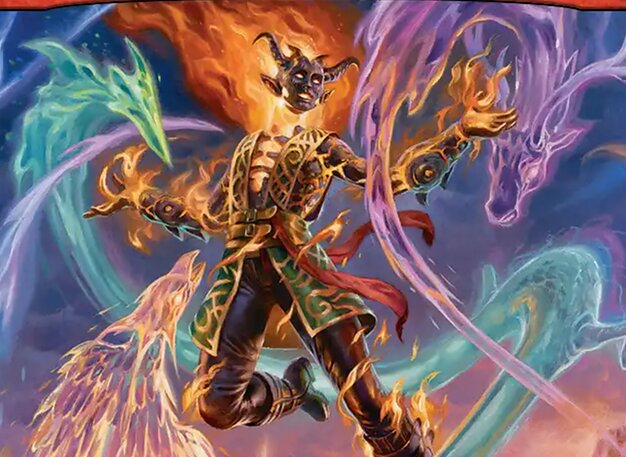
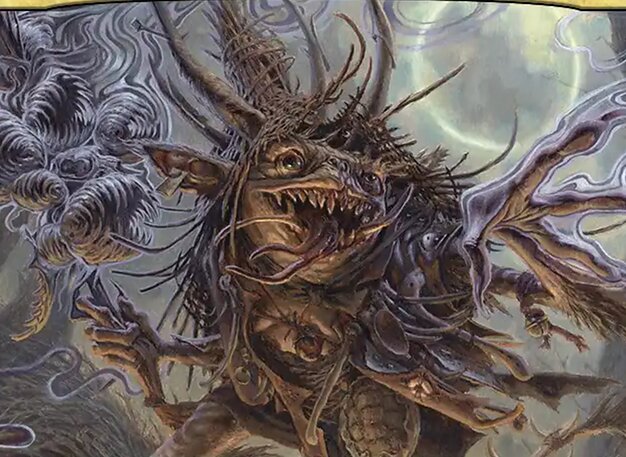
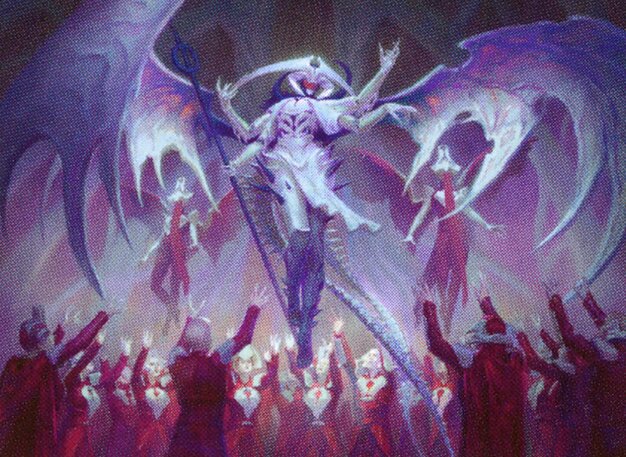
Ashling, the Limitless (Five-Color) remained the most-played commander by a wide margin at 1,893 games, more than 300 ahead of second-place Auntie Ool, Cursewretch (Jund) at 1,519. Both are new enough that their metagame positioning is still settling. On the win-rate leaderboard, Sephiroth, Fabled SOLDIER // Sephiroth, One-Winged Angel (Mono-Black) sits at 39.55% across 292 games, the strongest volume-adjusted rate in the dataset. Kinnan, Bonder Prodigy (Simic) backs that up with the top ELO score of 1,775 and a 37.95% win rate across 166 games. Izzet posted the best color win rate at 29.58%, while Grixis landed near the bottom at 21.95% across 3,694 games.
The play experience was calm. The typical game ran about 52 minutes, essentially flat month over month (median duration down just 0.1%). Average rounds held at 8.8, unchanged. Combo remains the fastest path to victory at an average of 6.8 rounds, while combat games stretch to 9.3. First-seat advantage continues: seat one wins 30.7% of the time versus 22.1% for seat four. Mulligans carry a real but modest cost, dropping win rate from 30.5% with no mulligans to 25.6% after three or more.
Three things are worth watching in March. Yuriko's +10-point surge across 224 games is the most volume-supported mover on the board. Winota's 38.95% arrival win rate is the kind of number that either stabilizes or corrects sharply once a larger sample accumulates. And Glarb's near-15-point drop is steep enough that a one-month correction is plausible. The MDI has been within a 0.8-point band since January. Format health looks stable entering spring.









Top 100 most-played commanders sized by play count.
Win rate change vs the previous month. Commanders need 100+ games in both months to qualify.
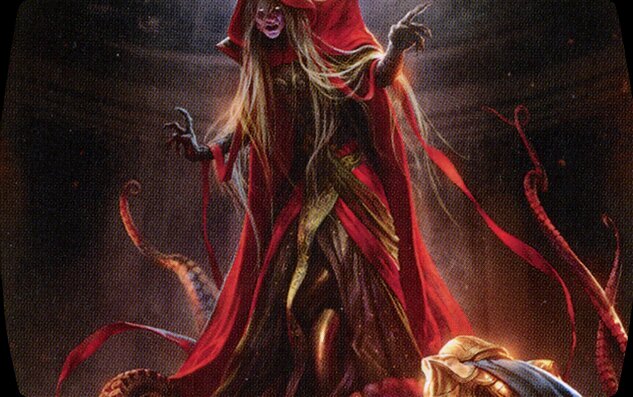



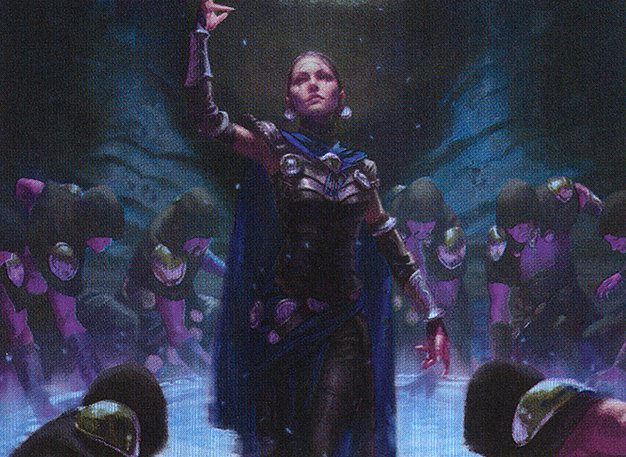 Inalla, Archmage Ritualist
 Tayam, Luminous Enigma
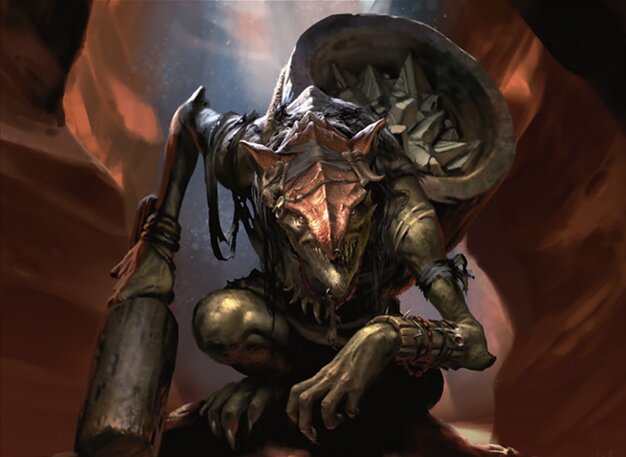 Zada, Hedron Grinder
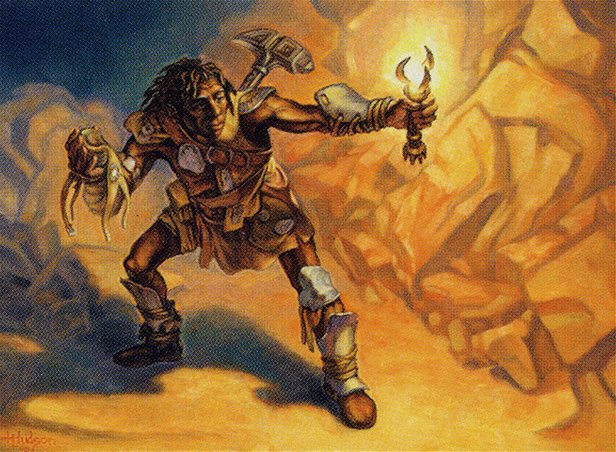 Norin the Wary
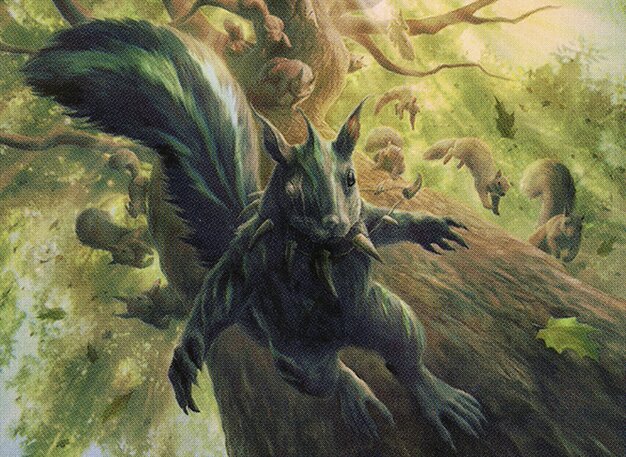
Three commanders made substantial gains in February. Yuriko, the Tiger's Shadow (Dimir) leads the high-confidence risers: across 224 games, win rate climbed +10.37 percentage points to 34.71%, a meaningful signal at that volume. Omo, Queen of Vesuva (Simic) and Dihada, Binder of Wills (Mardu) each jumped over +11 points, though both sat closer to the 100-game floor — treat those numbers as worth watching rather than settled conclusions. The fallers tell a sharper story. Glarb, Calamity's Augur (Sultai) shed 14.89 points to land at 18.4% across 159 games. That is a steep drop that correlates with Sultai posting the fourth-worst color win rate this month at 23.89%. Chatterfang, Squirrel General (Golgari) fell 10.54 points to 25.92% across a healthy 244 games, and The Scarab God (Dimir) dropped 9.73 points to 19.36%. Among new arrivals crossing the ranked threshold for the first time, Winota, Joiner of Forces (Boros) drew immediate attention at 38.95% across 86 games. That sample is near the floor, but the number is hard to ignore. Inalla, Archmage Ritualist (Grixis) arrived at a steadier 29.34% across 121 games.
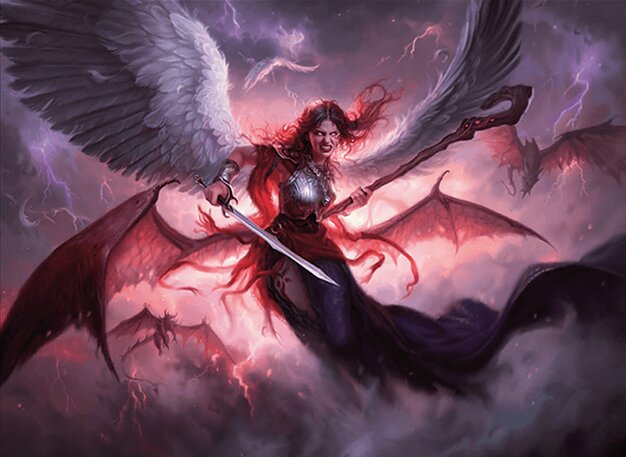
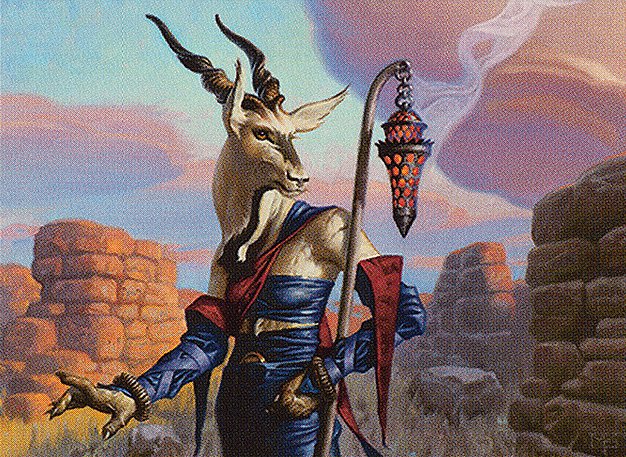
67.9% of games tracked on Playgroup received ratings this month, down 0.6% from January. The average fun score landed at 3.71 out of 5, down 0.8% from last month. Average salt came in at 1.44 on the 1-to-3 scale, up 0.7%. On a scale where 1 is no salt and 3 is very salty, 1.44 means the overwhelming majority of games felt fine to opponents. Kaalia of the Vast (Mardu) earned the saltiest rating at 1.93 across 82 rated games. That is the highest on the board but still well below the scale midpoint. Zedruu the Greathearted (Jeskai) topped the fun rankings at 4.12 out of 5 across 83 games, the clearest outlier on the positive side. Both commanders cleared the minimum pilot and game thresholds, so these are genuine community readings, not single-group artifacts.
How games ended in February 2026 across 23,333 tracked games.
55.4% of wins came through combat damage, up from 54.7% the prior month. Non-combat damage held second at 21.2%. Commander damage slipped from 9.1% to 8.6%. Combo edged down one-tenth of a point to 6.3%. The infinite combo rate sits at 5.1% of all games. Mill fell from 1.9% to 1.4%, its most notable single-category shift. The overall picture is stability: combat dominates, combos remain a small but consistent fraction, and no win condition moved more than half a percentage point except mill.





An MDI of 85 reflects a healthy meta where most commanders see balanced play, with 147 commanders needed to cover half of all games.
| May 2026 | Apr 2026 | Mar 2026 | Feb 2026 | Jan 2026 |
|---|---|---|---|---|
| 85.1 | 85.9 | 85.6 | 85.1 | 85.6 |
This report covers all finished multiplayer games tracked through the Playgroup.gg app during February 2026. Win rates are normalized to a 4-player baseline (25% expected) so pod size differences are weighted fairly. A commander needs at least 75 games to appear in ranked lists.
Salt ratings are measured from losing players and attributed to the winning commander. The scale runs 1 (no salt) to 3 (very salty). A Playgroup.gg editor reviews all content before publication.