

April 2026
The Commander metagame across 24,332 casual games tracked on Playgroup.gg. Win rates, movers, community sentiment, and diversity metrics across 2,305 unique commanders.
24,332 games tracked on Playgroup in April 2026 across 2,305 unique commanders. That game count is down 5.0% from March, a typical spring dip, but the commander diversity figure held flat at 0.0% change. The Meta Diversity Index came in at 85.9, rated "Healthy", and the top 10 commanders accounted for only 9.1% of all games. 155 commanders were needed to cover half the total play. The format is not contracting around a dominant core.
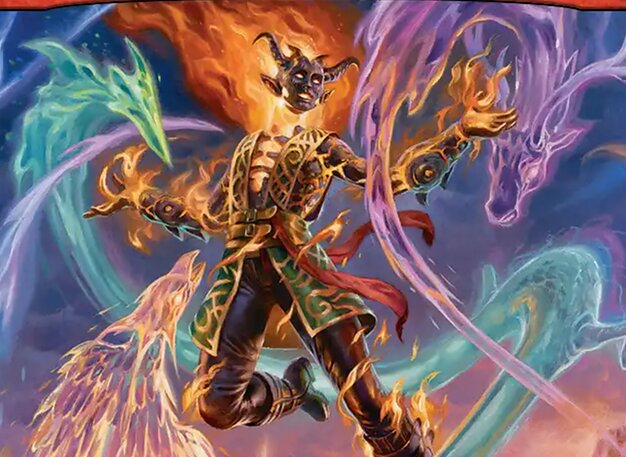
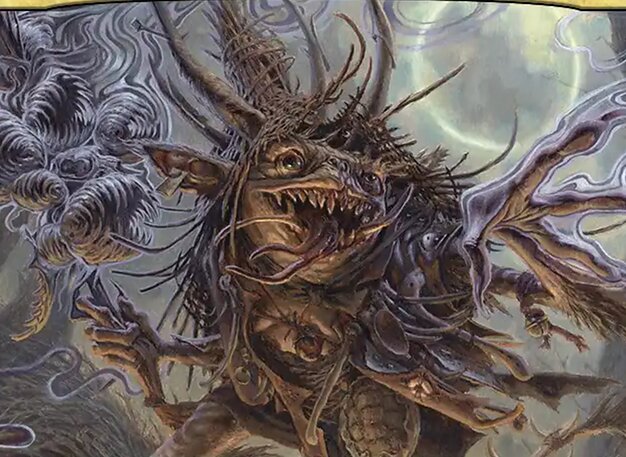
Ashling, the Limitless (Five-Color) remained the most-played commander at 1,084 games, ahead of Auntie Ool, Cursewretch (Jund) at 846 and Y'shtola, Night's Blessed (Esper) at 807. But volume and win rate tell different stories at the top. Tivit, Seller of Secrets (Esper) led all commanders in both win rate (43.09%) and ELO (1,744) on 94 games, right at the 75-game ranked floor. Rograkh, Son of Rohgahh (Mono-Red) held the second ELO slot at 1,740 with a more robust 256-game sample. Temur and Izzet were the best-performing color combinations at 29.59% and 29.29% win rate respectively. Dimir and Grixis sat at the bottom, at 22.21% and 22.86%.
The typical game ran about 52 minutes (median 3,154 seconds), up 1.7% from last month. Average rounds held flat at 8.8. Combo remains the fastest path to victory at 6.7 average rounds; combat closes games out at 9.2. Seat one continues to hold a real edge at 28.9% win rate versus 22.8% for seat four in four-player pods, a gap that has been consistent across months. Players who kept their opening hand won at 29.8%; those who took three or more mulligans fell to 22.3%.
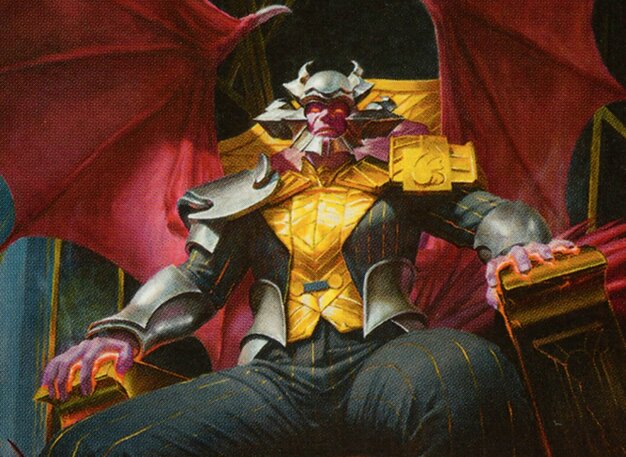
The mover to watch heading into May is Ob Nixilis, Captive Kingpin. A 9.79-point win rate jump to 42.16% plus a top-three ELO finish on 102 games is a combination that warrants attention. Kratos, God of War lands at 13.01% after a 10.46-point drop, the steepest fall and the lowest absolute win rate among qualified commanders this month. Whether that reflects a correcting metagame or a structural ceiling is a question the May data will need to answer.









Top 100 most-played commanders sized by play count.
Win rate change vs the previous month. Commanders need 100+ games in both months to qualify.
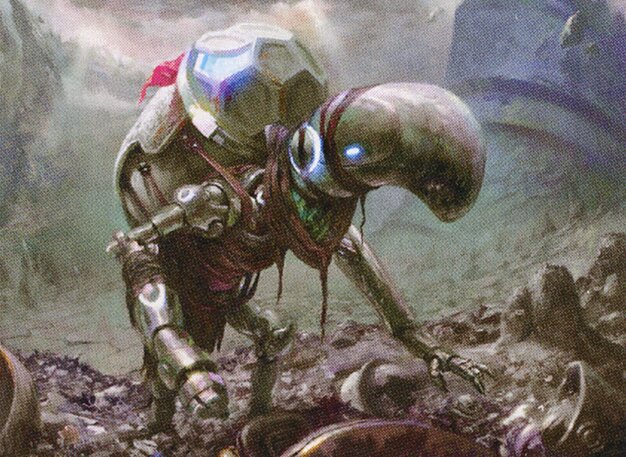
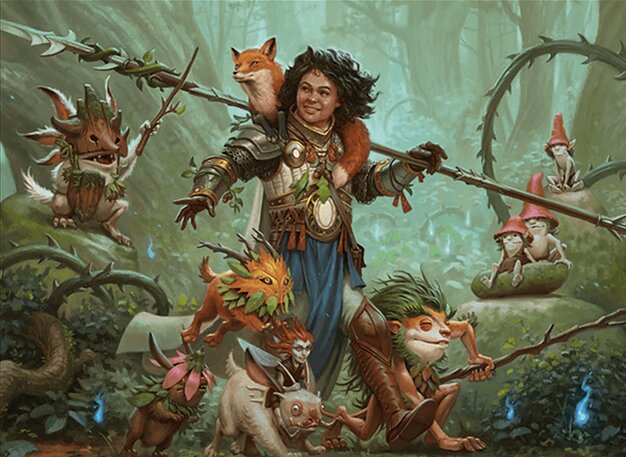
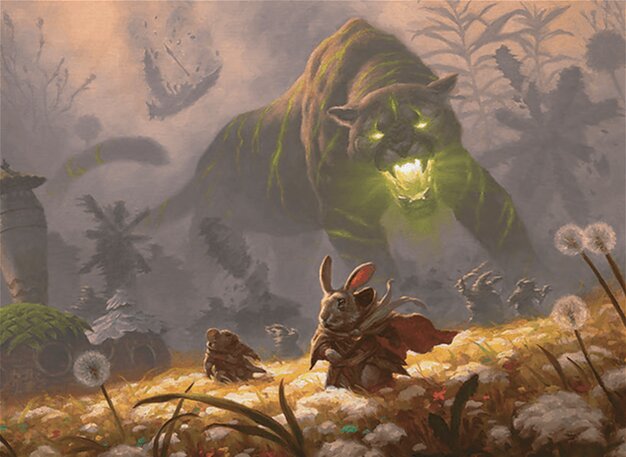

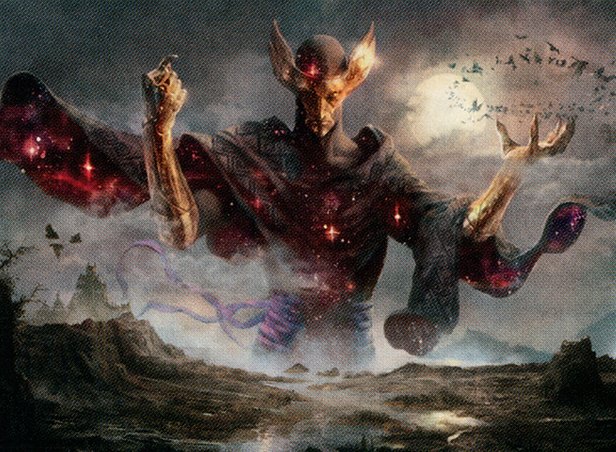 Phenax, God of Deception
 Light-Paws, Emperor's Voice
 Lord Windgrace
 Myrel, Shield of Argive
 Beledros Witherbloom
Three risers cleared the minimum threshold of 100 games this month, and the top two posted eye-catching swings. Elsha, Threefold Master (Jeskai) gained 9.97 percentage points to land at 31.43% win rate across 136 games. Ob Nixilis, Captive Kingpin (Rakdos) gained 9.79 points to reach 42.16%, the highest win rate of any commander meeting the ranked floor this month and a figure that also earns him a spot on the ELO leaderboard. Urtet, Remnant of Memnarch (Five-Color) rose 8.76 points, though its current rate of 24.29% is closer to the 25% baseline, so treat that swing as worth watching rather than a settled trend. The fallers tell a sharper story. Ellivere of the Wild Court (Selesnya) dropped 13.5 points to 17.91%. Ygra, Eater of All (Golgari) fell 11.7 points to 18.3%. Kratos, God of War (Mono-Red) lost 10.46 points and now sits at 13.01%, the lowest win rate among any commander with 100 or more games tracked this month. All three are well above the 100-game floor, so these are not noise. Among new arrivals, Myrel, Shield of Argive (Mono-White) debuted at 30.12% across 83 games, the strongest opening of the new entries.
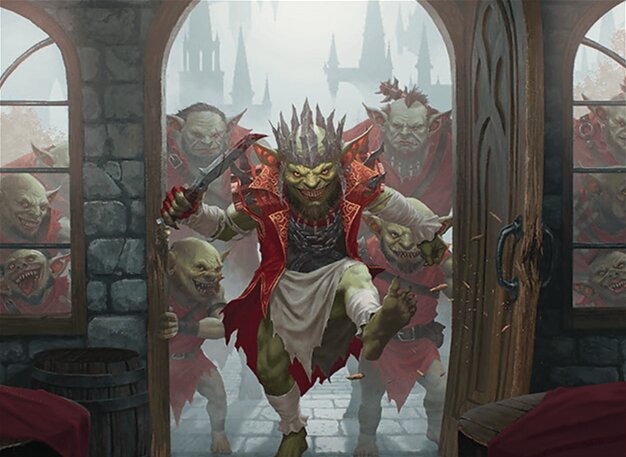
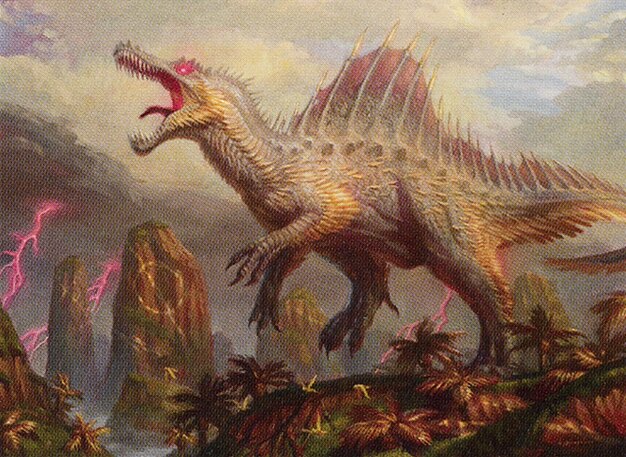
66.7% of games tracked on Playgroup received a rating this month, down 1.3 percentage points from last month. Average fun held at 3.73 out of 5, unchanged. Average salt held at 1.44 on the 1-to-3 scale, also unchanged. At 1.44, the format sits comfortably in the lower half of the scale. Most games are generating little to no friction from losing players. Krenko, Mob Boss (Mono-Red) earned the saltiest rating at 1.71 across 88 qualifying games. That score sits notably above the format average but is still well below the scale's midpoint. Etali, Primal Conqueror // Etali, Primal Sickness (Gruul) topped the fun ratings at 4.09 across 102 games, nearly a full point above the format average. The gap between those two numbers reflects what casual Commander tables tend to reward: big, splashy, shared-chaos effects over fast or grinding strategies.
How games ended in April 2026 across 24,332 tracked games.
Combat damage still accounts for 54.5% of wins, up a marginal 0.2 points from last month, continuing its position as the format's dominant finisher by a wide margin. Non-combat damage follows at 21.2%, up 0.6 points. Combo slipped from 6.4% to 6.0%, and Alternative win conditions fell from 6.3% to 6.0%. The infinite combo rate sits at 5.1% of all games. Mill (1.7%) and Poison (1.3%) remain niche. No category shifted by more than 0.8 points, making this one of the most stable win condition distributions in recent months.





An MDI of 86 reflects a healthy meta where most commanders see balanced play, with 155 commanders needed to cover half of all games.
| May 2026 | Apr 2026 | Mar 2026 | Feb 2026 | Jan 2026 |
|---|---|---|---|---|
| 85.1 | 85.9 | 85.6 | 85.1 | 85.6 |
This report covers all finished multiplayer games tracked through the Playgroup.gg app during April 2026. Win rates are normalized to a 4-player baseline (25% expected) so pod size differences are weighted fairly. A commander needs at least 75 games to appear in ranked lists.
Salt ratings are measured from losing players and attributed to the winning commander. The scale runs 1 (no salt) to 3 (very salty). A Playgroup.gg editor reviews all content before publication.