
June 2026
The Commander metagame across 24,486 casual games tracked on Playgroup.gg. Win rates, movers, community sentiment, and diversity metrics across 2,397 unique commanders.
24,486 games were tracked on Playgroup in June 2026, down 8.0% from May. Game volume dipped, but diversity did not. The Meta Diversity Index rose to 86.0, its highest point in the six months of historical data available, up from 85.1 in May. 2,397 unique commanders saw play, a 1.9% increase. The top 10 commanders account for just 8.5% of all games, and it takes 162 distinct commanders to cover half the format's activity. By every diversity metric, June is the healthiest month on record in this dataset.
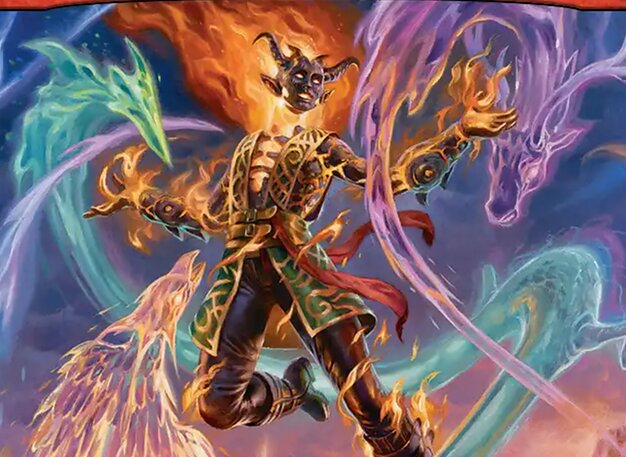
The commander landscape shows no single dominant pillar. Ashling, the Limitless leads in games played at 814 with a 30.4% win rate, followed closely by Y'shtola, Night's Blessed at 803 games and 27.7%. Neither win rate represents an outlier. The highest win rates belong to commanders with smaller samples: Maelstrom Wanderer at 44.2% across 86 games, The Locust God at 39.3% across 75 games. Among commanders with deeper volume, Xyris, the Writhing Storm at 38.1% across 193 games is the standout. Temur (GRU) is the best-performing color combination at 29.4% win rate across 2,439 games. Grixis and Dimir sit at the bottom, both at 22.8%.
The typical game ran about 51 minutes, down 5.7% on the median. Average rounds fell 2.2% to 8.9. June games resolved faster than May's, which aligns with combat's gain in win-condition share. Combo remains the fastest path to a win at 7.1 average rounds; combat is the slowest at 9.2. Seat one holds a measurable edge at 29.3% win rate versus seat four's 21.6%, a gap that has persisted across the data. Taking two or fewer mulligans costs almost nothing in win equity; three or more mulligans drops win rate to 20.9%.
Two things to watch in July: the Mardu surge. Both Kaalia of the Vast and Queen Marchesa posted double-digit win-rate gains in June. If that pattern holds with another month of data behind it, it becomes a genuine trend rather than a monthly fluctuation. Ovika, Enigma Goliath's 38.7% win rate with a growing sample will also be worth revisiting once it clears higher volume thresholds.











Top 100 most-played commanders sized by play count.
Win rate change vs the previous month. Commanders need 100+ games in both months to qualify.


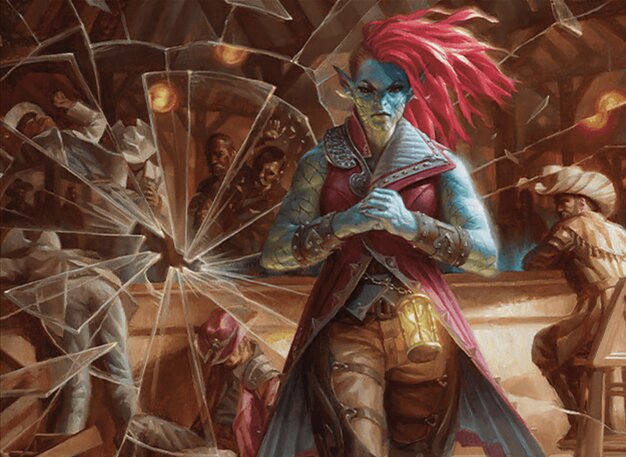

 Omnath, Locus of Rage
 Imotekh the Stormlord
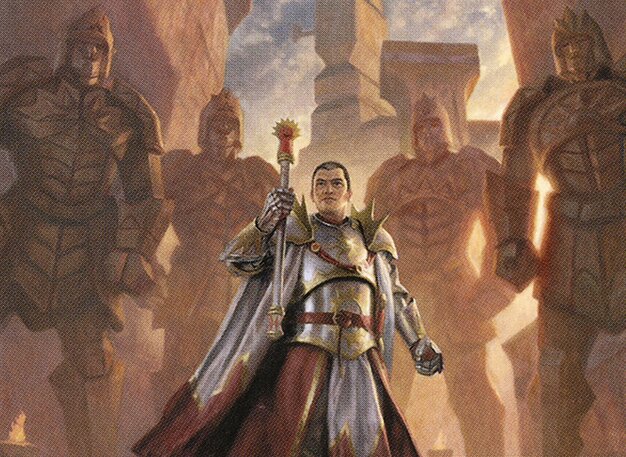 General Ferrous Rokiric
 Arahbo, Roar of the World
 Kyler, Sigardian Emissary
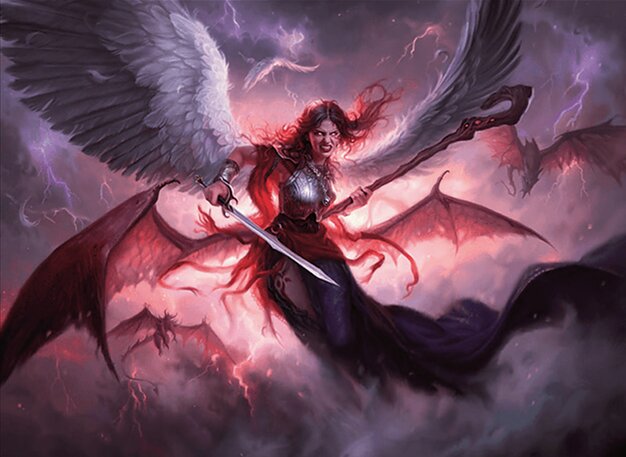
The biggest story in June's mover data is a pair of Mardu commanders surging simultaneously. Kaalia of the Vast climbed +10.44 percentage points to a 33.1% win rate across 356 games, making it the highest-volume riser with the most statistical weight behind it. Queen Marchesa moved in parallel, up +11.13 points to 31.7% across 168 games. Two Mardu (BRW) commanders both posting double-digit win-rate gains in the same month is worth noting, even if the cause remains unclear from the data alone. Ovika, Enigma Goliath led all risers with +11.31 points to reach 38.7%, though its 111-game sample sits closer to the minimum floor, so treat that figure as a strong signal worth watching rather than a settled conclusion. On the falling side, Magda, Brazen Outlaw dropped 8.59 points to 27.5% across 140 games. That is still above the 25% baseline, but the correction is sharp. Obeka, Splitter of Seconds fell 7.1 points to 16.8% across 107 games, the lowest win rate among the fallers. Kefka, Court Mage // Kefka, Ruler of Ruin shed 6.98 points across a larger 298-game sample, landing at 24.2%, which implies real regression toward the mean after what was apparently a strong prior month. Among new arrivals, Omnath, Locus of Rage debuted at a 30.9% win rate across 85 games.

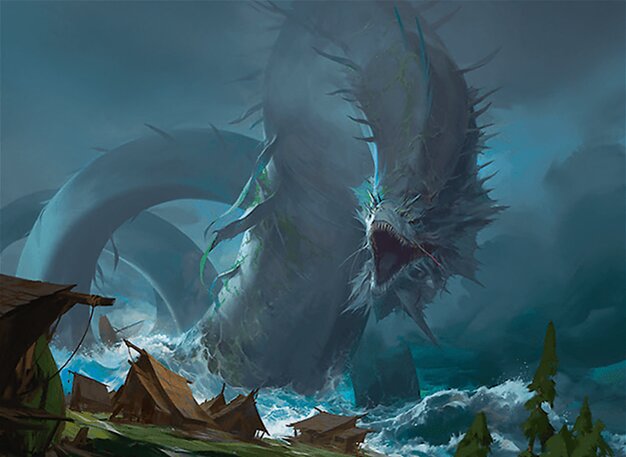
June's sentiment data is one of the cleaner reads in recent months. Average fun across rated games sits at 3.76 out of 5, up 0.8% from May, and average salt lands at 1.43 on the 1-to-3 scale, down 0.7% from last month. At 1.43, salt is low. Most players finishing a losing game on Playgroup are not reporting much frustration. Dina, Essence Brewer carries the month's highest salt rating at 1.68 across 141 rated games. On a scale where 1 is no salt and 3 is very salty, 1.68 is a mild elevation rather than a community complaint. Dina also ranks fifth in total games played at 667, with a below-average win rate of 22.4%, which suggests opponents are noticing the deck's style even when it does not win. The most fun commander is Aesi, Tyrant of Gyre Strait at 4.17 out of 5 across 126 games. That is a notably high score, and Aesi's Simic (GU) land-focused play pattern appears to generate genuine enthusiasm at the table.
How games ended in June 2026 across 24,486 tracked games.
Combat remains the dominant path to victory at 56.1%, up 1.3 points from May's 54.8%. Non-Combat Damage gave back ground, falling from 21.1% to 19.6%. Commander Damage ticked up slightly, from 8.7% to 9.2%. Combo held nearly flat at 6.0% versus 6.1% prior. Infinite combos account for 4.9% of all games. Mill dropped from 1.9% to 1.6%. The overall picture is a format that resolves through combat in more than half of all games, with spell-based damage as a clear but distant second.





An MDI of 86 reflects a healthy meta where most commanders see balanced play, with 162 commanders needed to cover half of all games.
| May 2026 | Apr 2026 | Mar 2026 | Feb 2026 | Jan 2026 |
|---|---|---|---|---|
| 85.1 | 85.9 | 85.6 | 85.1 | 85.6 |
This report covers all finished multiplayer games tracked through the Playgroup.gg app during June 2026. Win rates are normalized to a 4-player baseline (25% expected) so pod size differences are weighted fairly. A commander needs at least 75 games to appear in ranked lists.
Salt ratings are measured from losing players and attributed to the winning commander. The scale runs 1 (no salt) to 3 (very salty). A Playgroup.gg editor reviews all content before publication.