
collections_bookmark
Part of March of the Machine
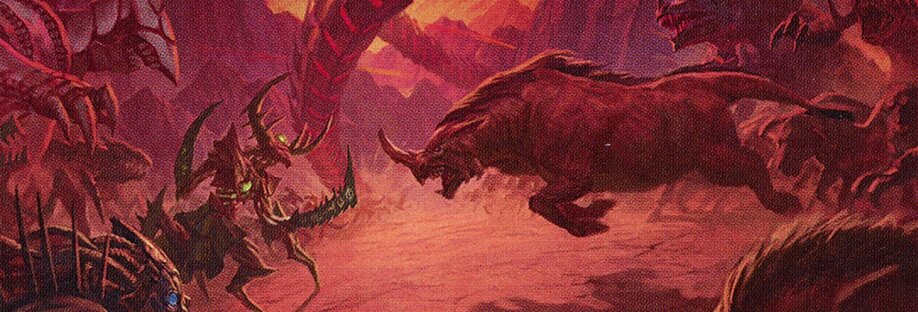
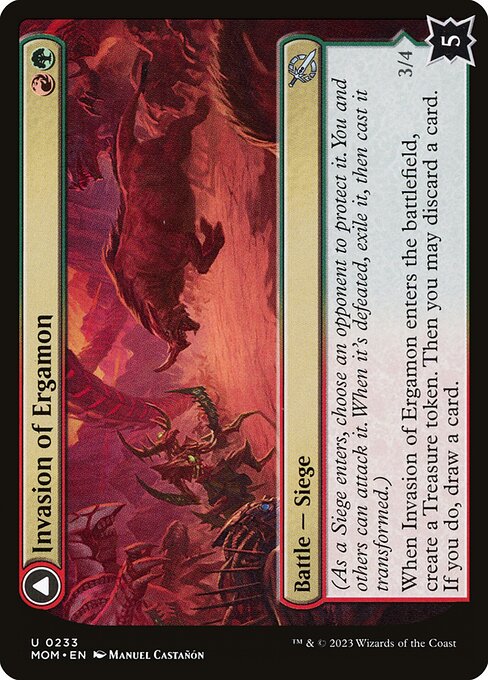
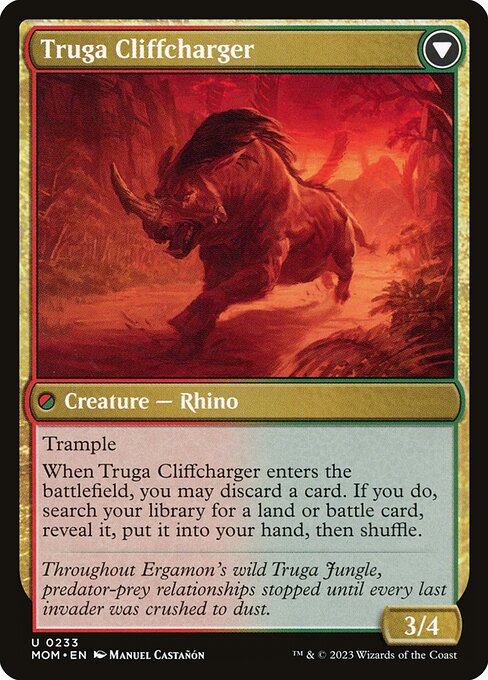


Card Preview
Invasion of Ergamon // Truga Cliffcharger
Battle — Siege // Creature — Rhino
·
March of the Machine (MOM)
Times Brought
4
Decks Running
3
In Decks
—
Decklist Inclusion
—
Format
Showing 1v1 (duel) data only. 1v1 is a different format from multiplayer Commander, so these numbers are not comparable.
Card text
Invasion of Ergamon
Battle — Siege
(As a Siege enters, choose an opponent to protect it. You and others can attack it. When it's defeated, exile it, then cast it transformed.)
When this Siege enters, create a Treasure token. Then you may discard a card. If you do, draw a card.
Defense 5
Truga Cliffcharger
Creature — Rhino
Trample
When this creature enters, you may discard a card. If you do, search your library for a land or battle card, reveal it, put it into your hand, then shuffle.
3 / 4
March of the Machine (MOM)
·
Uncommon
·
Illustrated by Manuel Castañón
0 of 100 times cast
0%
Full analysis unlocks as more games are tracked. Stats refresh nightly.
Frequently Asked
Why isn't there more data on this card?
Playgroup Live collects per-card gameplay data from real Commander games. Basic play counts appear once a card reaches 100 tracked games; the full deep-dive page needs a larger, more diverse sample (at least 300 tracked games played by 10 or more different pilots, with no single pilot over 40 percent of the copies). Until this card clears those bars you're seeing only the basic counts. Stats refresh nightly.
How is Playgroup Live card data collected?
Players using Playgroup Live import their decklists before a game and log card actions as they play. Each cast, zone change, and resolution is recorded as a real game event. Stats on this site are computed from those events, not from decklist scrapes or theorycrafting. Playgroup has recorded 660,000+ Commander games overall, and this card-level play data comes from the Playgroup Live subset of that corpus.