Live Play Data

The Commander cards
we've watched people play.

Every stat on this page is computed from 1,490 tracked plays across real Commander games on Playgroup Live. Not decklist scrapes. Not theorycrafting. What actually happens when the cards hit the table.

Cards with live data
17,077
Games tracked
1,490
Deep dives
274
Last refreshed
< a minute ago
Command Tower card art
Spotlight

Command Tower

Command Tower appears in 79% of tracked Commander decks on Playgroup Live. When drawn, it's cast 80% of the time, and 95% of cast copies are still on the battlefield when the game ends.

Inclusion
78%
WR Lift
+3.1%
Median Cast T
4
Read the full breakdown

Which Commander cards lift win rate the most when cast?

Positive cast-vs-library delta means players who actually cast this card win more often than players whose copy never left the library. These are the cards that seem to earn their slot — the bigger the delta, the stronger the correlation.

Which cards get cast on curve most consistently?

On-curve means cast on the turn equal to the card's mana value: a 3-drop on turn 3, a 5-drop on turn 5. Cards near the top of this list slot into ramp curves cleanly — you draw them at a useful time rather than stranding them in hand.

Which cards sit in hand the longest before seeing play?

Median turns between drawing a card and casting it. A high number usually means either a high mana cost with no ramp around it, or a niche card that waits for the right moment. Think of it as the dead-in-hand gauge.
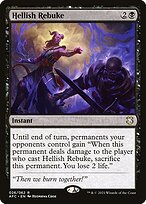
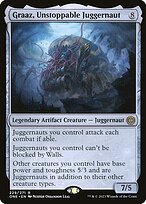
Which cards see the most live Commander play on Playgroup Live?

Pure volume — the cards that appear in the most tracked games. Unlike EDHREC's decklist scrape, every count here is a real game that finished with players actually drawing and casting the card.

Which cards just unlocked deep-dive pages?

Cards that recently crossed the threshold for a full breakdown page. Every entry here is a freshly-generated narrative: queryable stats, cast-turn distribution, commander pairings, and a readable summary of what the numbers mean.

Browse by color

Filter the curated lists by color identity. Multicolor cards show up under every colour they include.


About this data

Methodology, refresh cadence, and how to use the numbers honestly.

How does Playgroup.gg collect this card data? +
Players using Playgroup Live import their decklists before a game and log card actions as they play. Each cast, zone change, and resolution is recorded as a real game event. Stats here are computed from those events, not from decklist scrapes or theorycrafting.
How often do stats refresh? +
Card stats are recomputed every night at 03:00 UTC from the previous day's game events. Deep-dive narrative pages refresh when a card's underlying numbers drift by more than 10 percent, or when a card first crosses the threshold for a dedicated page.
Why do only some cards have deep-dive pages? +
A card earns a full breakdown page once it has appeared in at least 100 tracked Commander games. Below that bar the sample is too small to make honest claims. Every other card still resolves at this URL with the basic counts and a note that the deep dive is pending.
How is this different from EDHREC? +
EDHREC ranks cards by how often they appear in public decklists. Playgroup.gg ranks by what actually happens when those decks get played. That means we can tell you things a decklist cannot: when cards get cast, how often they stick on the battlefield, and how win rate shifts when they resolve versus when they never leave the library.
What do "win rate when cast" and "cast-vs-library delta" mean? +
"Win rate when cast" is the percentage of games a player won when this card resolved at least once. "Cast-vs-library delta" is the gap between that number and the win rate of games where the same card stayed in the library all game. A positive delta means casting the card correlates with winning, controlling for the deck.
Can I use this data in my own analysis? +
Yes, the aggregate per-card stats are published under CC-BY 4.0. Link back to the relevant card page and you're good to go. The raw game events themselves are not public; the aggregates are what we publish.