
collections_bookmark Part of Bloomburrow
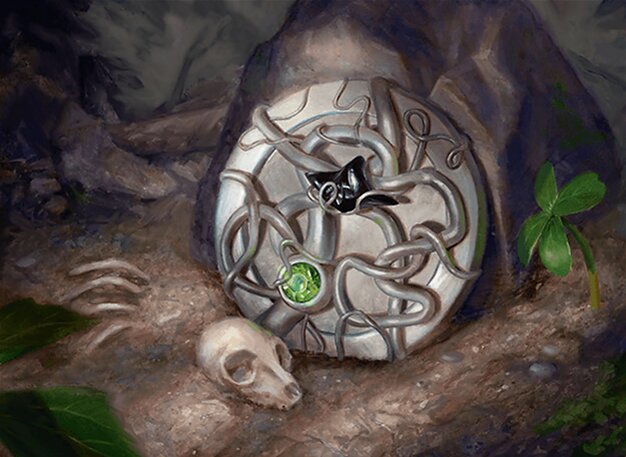
Talisman of Resilience card art
Live Play Data

Talisman of Resilience

{2} · Artifact · Duskmourn: House of Horror Commander (DSC)
12%
Live Inclusion
Times Brought
1016
Decks Running
483
Median Cast Turn
4
Drawn → Played
78%
Format

12% of tracked Commander decks in Golgari colors run Talisman of Resilience, and 78% of drawn copies reach the battlefield, with a median first-cast turn of 4.

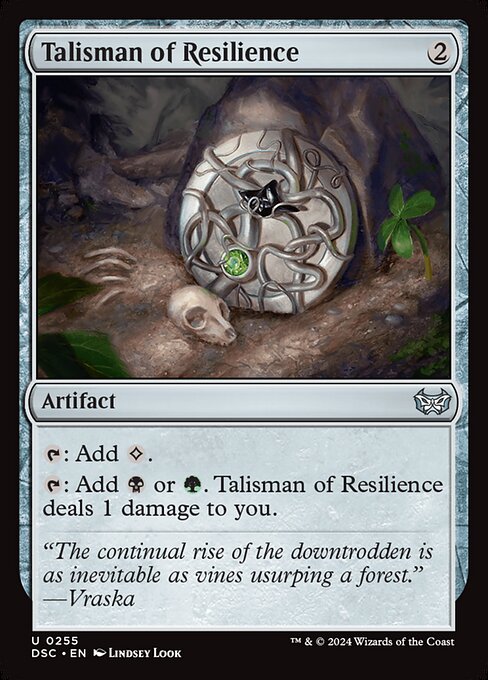
Talisman of Resilience is a 2-mana artifact mana rock that taps for colorless or for black or green at the cost of 1 life. Across 985 tracked multiplayer Commander games on Playgroup Live, it sits in 12% of the 4045 distinct decks in the dataset, a figure confined to its Golgari and Golgari-adjacent color identities.

The draw-to-play rate of 78% tells a consistent story: when a player draws this card, it reaches the battlefield in roughly three out of four instances. Median first cast lands on turn 4, close to its mana value of 2, though many copies land earlier off opening-hand ramp sequences. Once cast, 81% of resolved copies remain on the battlefield through the end of the game, reflecting how rarely opponents bother to destroy a simple mana rock.

The data comes from 426 distinct players, and no single contributor accounts for more than 22% of tracked instances, which gives the sample reasonable spread for a color-gated uncommon. The card is legal in Commander, Legacy, Modern, Vintage, and several other formats, but its natural home is Commander, where consistent early mana acceleration is at a premium.

At a glance
  • 12% of tracked Commander decks in the dataset include Talisman of Resilience
  • 78% of drawn copies are cast before the game ends
  • T4 median first-cast turn across tracked games
  • 81% battlefield stickiness once the Talisman resolves
  • 426 distinct players have brought this card to a tracked game
  • 26% win rate in games where Talisman of Resilience was cast

First-cast turn

n=177
16%
T1
21%
T2
10%
T3
11%
T4
7%
T5
27%
T6-9
8%
T10+
Median 4 P25 2 · P75 6 · max 13
On curve 37% (38 / 177 cast on T2) Cast same turn as drawn 49%

The "good card" funnel

1016 brought · 426 players
Brought to game
1016
Ever drawn
228
Reached battlefield
177
Still on board at game end
144
78%

Of 1016 Talismans brought to tracked games, 228 were drawn, 177 of those were cast, and the large majority remained on the battlefield through the end of the game.

≥ -2.6pp

Players who cast this card win 26% of the time (n=163) , vs 22% when it never left the library (n=670).

When players drew this card but left it in hand, they won 26% (n=47) — about the same as leaving it in the library. Those players survived long enough to draw it, so the gap above is about the card resolving, not just about surviving.

Observed gap +4.3pp; 95% confidence interval -2.6pp to +11.2pp. Correlational, not causal: powerful payoffs also get cast more often in games you are already winning.

Final zone distribution

268 instances
1.9%
Library
53.7%
Battlefield
21.6%
Graveyard
7.5%
Exile

Most Talisman of Resilience copies that enter a game stay on the battlefield through end of game. The library almost never appears as a final zone because observed instances have already been interacted with or drawn.

Commanders that played this card

in tracked games

The commander list spans pure Golgari builds, Sultai, Jund, and even five-color shells, reflecting how any deck containing black and green can slot this Talisman in as a two-mana ramp piece.

Card text
Talisman of Resilience card

Talisman of Resilience

{2}
Artifact
{T}: Add {C}. {T}: Add {B} or {G}. This artifact deals 1 damage to you.
Duskmourn: House of Horror Commander (DSC) · Uncommon · Illustrated by Lindsey Look

Frequently Asked

How often is Talisman of Resilience drawn in a Commander game?
In 985 tracked multiplayer games where the card was in the deck, it was drawn 22% of the time. That is consistent with a singleton in a 100-card deck. Of 228 instances that reached a player's hand, 78% were cast before the game concluded. The remainder were mostly held in hand when the game ended rather than deliberately withheld.
What turn does Talisman of Resilience usually get cast?
Median first-cast turn is 4. The distribution has an early cluster representing copies in opening hands cast on turns 1 and 2, and a second cluster in the mid-game between turns 6 and 9. The on-curve rate of 37% reflects that many copies arrive after the game's opening turns, which is typical for any singleton that isn't always in the opening hand.
Does casting Talisman of Resilience correlate with winning?
In 163 tracked participations where the Talisman was cast, the win rate was 26% versus 22% in the 670 participations where it stayed in the library. That is a +4.3 percentage-point lift. Both sample buckets are reasonably sized, but treat the gap as a directional signal rather than a conclusive finding. Better-built decks also tend to run more mana rocks, so some of the delta likely reflects deck quality.
Is Talisman of Resilience banned anywhere?
Talisman of Resilience is legal in Commander, Legacy, Modern, Vintage, Historic, Timeless, Duel Commander, Brawl, and several other formats. It is not legal in Standard, Pioneer, Pauper, or Pauper Commander. There are no current bans or restrictions relevant to its Commander legality.
How sticky is Talisman of Resilience once it hits the battlefield?
81% of cast copies are still on the battlefield at the end of the game. Artifact mana rocks rarely draw targeted removal in Commander because they pose no immediate threat. The main ways a Talisman exits are mass artifact destruction and incidental sacrifice effects. The graveyard is the most common non-battlefield final zone in the tracked data.
Which commanders most often run Talisman of Resilience?
The top commanders by raw deck count in the Playgroup Live dataset are The Wise Mothman (Sultai), Hazel of the Rootbloom (Golgari), and Ulalek, Fused Atrocity (WUBRG). Pure Golgari commanders like Chatterfang, Squirrel General and The Serpent Society also feature prominently. The spread across commanders is wide, with 426 unique players represented, and the single heaviest contributor accounts for only 22% of instances. That breadth strengthens the reliability of the aggregate numbers.