
collections_bookmark
Part of Outlaws of Thunder Junction

 ·
Sorcery
·
Outlaws of Thunder Junction Commander (OTC)

Card Preview
Seize the Spotlight
·
Sorcery
·
Outlaws of Thunder Junction Commander (OTC)
Times Brought
693
Decks Running
356
In Decks
—
Decklist Inclusion
—
Format
Showing 1v1 (duel) data only. 1v1 is a different format from multiplayer Commander, so these numbers are not comparable.
Card text
Seize the Spotlight
Sorcery
Each opponent chooses fame or fortune. For each player who chose fame, gain control of a creature that player controls until end of turn. Untap those creatures and they gain haste until end of turn. For each player who chose fortune, you draw a card and create a Treasure token.
Outlaws of Thunder Junction Commander (OTC)
·
Rare
·
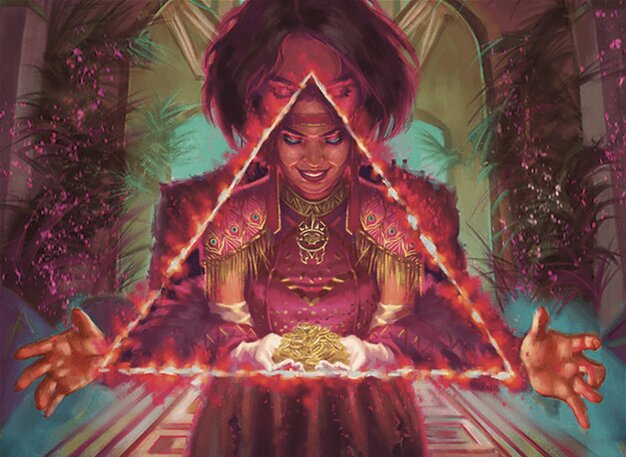
Illustrated by Ernanda Souza
Final zone distribution
133 instances1.5%
Library
3.0%
Battlefield
46.6%
Graveyard
7.5%
Exile
Commanders that played this card
in tracked games-
1
Olivia, Opulent Outlaw

 34 decks
-
2
Smaug the Magnificent
26 decks
-
3
Kratos, God of War
24 decks
-
4
Knuckles the Echidna
18 decks
-
5
Smaug the Impenetrable
13 decks
-
6
Vihaan, Goldwaker
13 decks
-
7
Deadpool, Trading Card
9 decks
-
8
Evereth, Viceroy of Plunder
9 decks
-
9
Kitt Kanto, Mayhem Diva
 8 decks
-
10
Edea, Possessed Sorceress
 7 decks
The "good card" funnel
693 brought · 336 playersBrought to game
693
Ever drawn
127
Reached battlefield
60
Still on board at game end
4
First-cast turn
n=60
0%
T1
0%
T2
3%
T3
10%
T4
13%
T5
58%
T6-9
15%
T10+
Median
7.0
P25
5
· P75
9
· max
11
On curve
3%
(2 / 60 on or before T3)
Cast same turn as drawn
41%
Frequently Asked
Why isn't there more data on this card?
Playgroup Live collects per-card gameplay data from real Commander games. Play counts appear once a card reaches 100 tracked games, and the full charts need a sample of at least 25 observed games that is not dominated by a single pilot. Until this card clears those bars you're seeing only the basic counts. Stats refresh nightly.
How is Playgroup Live card data collected?
Players using Playgroup Live import their decklists before a game and log card actions as they play. Each cast, zone change, and resolution is recorded as a real game event. Stats on this site are computed from those events, not from decklist scrapes or theorycrafting. Playgroup has recorded 790,000+ Commander games overall, and this card-level play data comes from the Playgroup Live seats playing virtual cards, a subset of that corpus.