






Summary
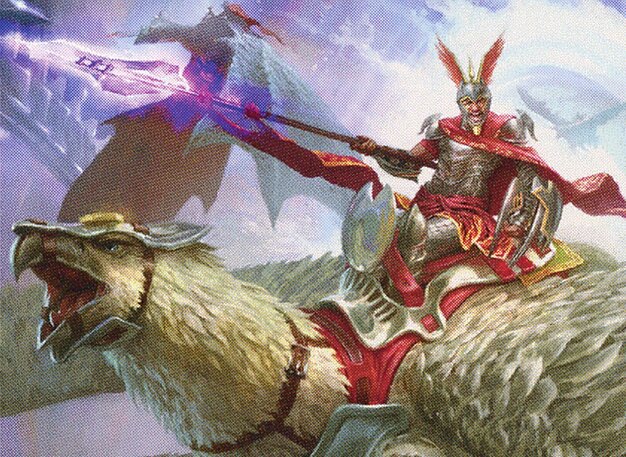
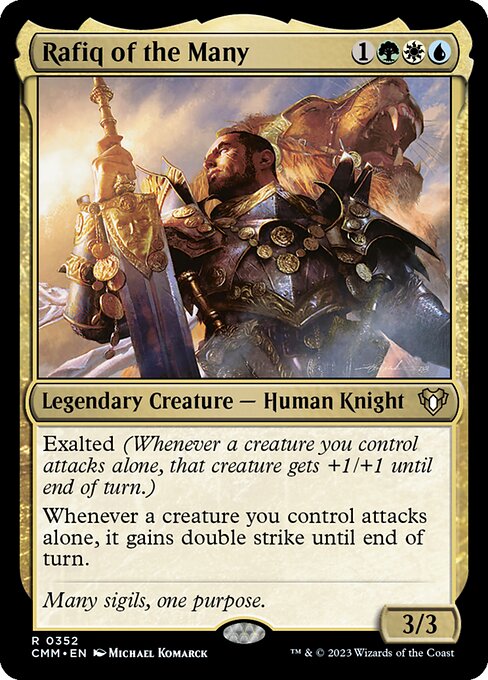
Rafiq of the Many is a Magic: The Gathering commander tracked across 1,011 recorded Playgroup games, winning 29% of them (294–710) at an Elo of 1,603, ranking #549 globally.
Wins average 9 turns, with 776877 damage dealt and 0.73 player kills per game on average.
Frequently Asked
What is Rafiq of the Many's win rate?
How long do winning games with Rafiq of the Many take?
How many decks use Rafiq of the Many?
Global Elo trend
Commander popularity trend
Misc. stats
Top 5 public decks
| Rank | Elo | User | Games | Wins |
|---|---|---|---|---|
| 1 | 1579 | 7sigma | 17 | 7 |
| 2 | 1569 | Coy | 2 | 2 |
| 3 | 1548 | Florens | 11 | 5 |
| 4 | 1547 | F3RR3T | 5 | 3 |
| 5 | 1537 | Shifty | 9 | 3 |
How does this commander win?
When Rafiq of the Many wins, 47.2% of wins come via commander damage across tracked games with a recorded win condition.
Staples that win games for Rafiq of the Many
Cards that raise this deck's measured win rate the most, compared with Rafiq of the Many decks that leave them out.
| # | Card | Lift Win-rate lift |
|---|---|---|
| 1 |

|
+7.6 pp |
| 2 |

|
+7.1 pp |
| 3 |

|
+6.5 pp |
| 4 |

|
+6.1 pp |
| 5 |

|
+4.7 pp |
| 6 |

|
+3.3 pp |
| 7 |

|
+2.8 pp |
| 8 |

|
+2.5 pp |
| 9 |

|
+2.5 pp |
| 10 |

|
+2.3 pp |
Show 4 more (ranks 11-14)
| # | Card | Lift Win-rate lift |
|---|---|---|
| 11 |

|
+1.0 pp |
| 12 |
|
+0.6 pp |
| 13 |

|
+0.4 pp |
| 14 |

|
+0.0 pp |
Measured win-rate lift against decks on the same commander without the card, ranked by the 95% lower bound. How this is measured
Does seating order matter?
Rafiq of the Many wins 35.96% of games from position 1 and 0.0% from position 6 across tracked games.
Do mulligans hurt this commander?
Across tracked games, Rafiq of the Many wins 26.06% after 0 mulligans and 0.0% after 4 mulligans.
How do players rate games with this commander?
Pilot rating
Pilots rate their own games with Rafiq of the Many 3.61/5 on average, across 527 self-reports.
Opponent salt
When Rafiq of the Many wins, opponents flag the game as salty 28.0% of the time across 304 tracked wins.
Best and worst matchups
Opposing commanders with at least ten tracked games against Rafiq of the Many. Pairs with fewer than 25 games are shown in italics; treat those as suggestive, not statistical.